
Biomimetic Onlays in Gulf Breeze, FL
If you've been told you need a crown, you may have more than one treatment option. For many damaged or decayed teeth, a biomimetic ceramic onlay can restore strength and function while preserving far more healthy tooth structure than a traditional crown. At Pearl & Pine Dental Studio in Gulf Breeze, FL, biomimetic onlays are one of our preferred treatment options because they allow us to protect and strengthen teeth while conserving as much natural tooth structure as possible. It's one of the most meaningful ways we put our philosophy of minimally invasive, tooth-preserving dentistry into practice.
What Is a Biomimetic Onlay?
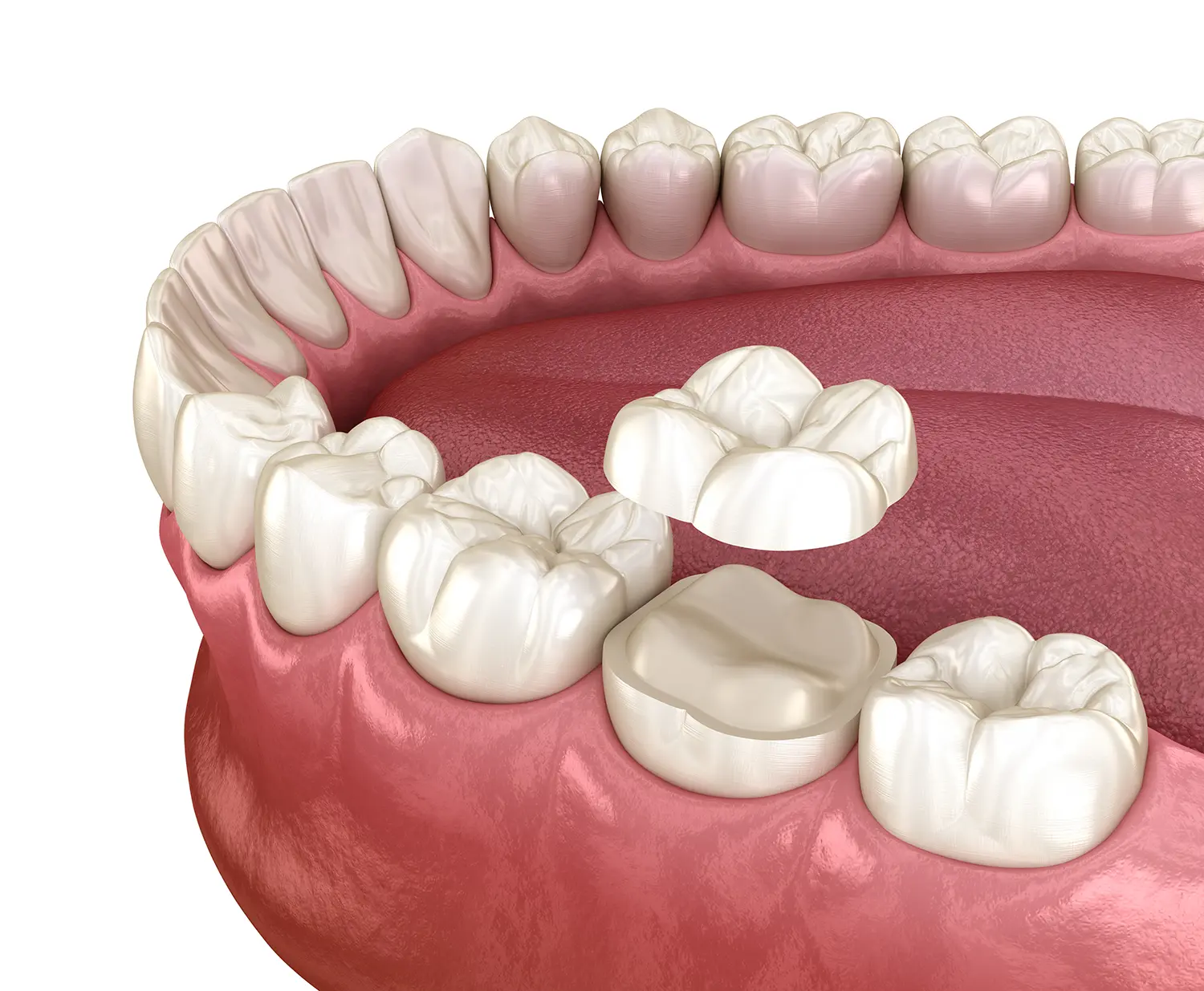
A dental onlay is a partial-coverage restoration that covers one or more cusps of a damaged or decayed tooth, but does not require the full, all-around preparation of a crown. When fabricated from high-quality ceramic and bonded with advanced adhesive techniques, an onlay restores the tooth's natural shape, strength, and function while removing only the damaged or decayed portions. It is one of the most conservative restorations available for moderate-to-significant tooth damage.
The term "biomimetic" describes the philosophy behind how the onlay is designed and placed: mimicking the natural structure and flexibility of tooth enamel, bonding in harmony with the tooth's biomechanics, and distributing bite forces the way a healthy natural tooth would.
Onlays vs. Crowns — Understanding the Difference
A crown requires removing tooth structure from all sides of the tooth, reducing it to a prepared stump. This removes healthy enamel and dentin that may not need to be removed and it is irreversible. An onlay, by contrast, is prepared minimally: only the damaged tissue is removed, and the restoration bonds precisely to the remaining healthy tooth. For teeth with sufficient healthy structure remaining, an onlay is often a more conservative option because it preserves significantly more natural tooth structure while still restoring strength and function.
Same-Day Onlays at Pearl & Pine
We fabricate most onlays in-house using our ceramic milling unit, which means your restoration can be designed, milled, and placed in a single appointment. No temporary restoration, no second visit, no waiting a week or two for a lab to send it back. You leave with a permanent, precisely fitted ceramic onlay on the same day you come in.
Built to Last, Designed to Preserve
Ceramic onlays are strong, beautiful, and biocompatible. They are shade-matched to your natural teeth and virtually invisible. And because they preserve more healthy tooth structure than a crown, they set up your tooth for greater long-term success. At Pearl & Pine, this is not just a service but an expression of our core clinical values.
Frequently Asked Questions
How do I know if I'm a candidate for an onlay?
The best candidates are patients with cracked teeth, large failing fillings, or moderate-to-significant decay who still have enough healthy tooth structure remaining. A comprehensive exam, digital imaging, and evaluation of the tooth's strength help determine whether an onlay or crown is the better option.
Does getting an onlay require a shot or drilling?
Yes, local anesthesia is used to ensure you are completely comfortable, and a small amount of preparation is required to remove damaged tissue and create a bonding surface. However, the preparation is significantly less invasive than a full crown preparation. Sedation is also available for anxious patients.
Will my onlay look natural?
Yes. Ceramic onlays are carefully shade-matched to your surrounding teeth and are virtually indistinguishable from natural enamel. Most patients cannot tell their onlay apart from their natural tooth after placement.
How do I care for a ceramic onlay?
Care for an onlay the same way you care for your natural teeth: brush twice daily, floss regularly, and come in for routine cleanings. Avoid using your teeth as tools or biting on very hard objects like ice. With proper care, a well-placed onlay can last many years.
Can an onlay be placed if I have a root canal treated tooth?
In some root canal treated teeth, a biomimetic onlay may be an excellent option. In others, a full crown may still be the best choice. The decision depends on how much healthy tooth structure remains and the forces that tooth must withstand.
Is an onlay the same as an inlay?
An inlay fits within the cusp tips of the tooth. An onlay extends over one or more cusps. Both are partial-coverage, minimally invasive restorations. The choice between them depends on the location and extent of damage on the specific tooth.